IVF Explained: What to Expect at Every Stage of the Journey
The journey to parenthood looks different for everyone. For many couples, In Vitro Fertilization (IVF) becomes a beacon of hope after months or years of trying to conceive. Yet, the process can feel overwhelming, confusing, and emotionally exhausting — especially when you're navigating it without a clear roadmap.
This guide breaks down the IVF journey — step by step — in simple, human language. Whether you're just starting to explore your options or you're about to begin your first cycle, this article will help you know what to expect, emotionally and physically, at every stage.
What Is IVF, and Who Is It For?
IVF, or In Vitro Fertilization, is a form of assisted reproductive technology (ART) where eggs are retrieved from the ovaries, fertilized with sperm in a laboratory, and the resulting embryo is transferred into the uterus.
IVF is commonly recommended for:
- Women with blocked or damaged fallopian tubes
- Couples dealing with male factor infertility (low sperm count or motility)
- Women with ovulation disorders such as PCOS
- Those diagnosed with endometriosis
- Unexplained infertility cases
- Same-sex couples or single parents using donor eggs or sperm
The IVF Journey: Step-by-Step
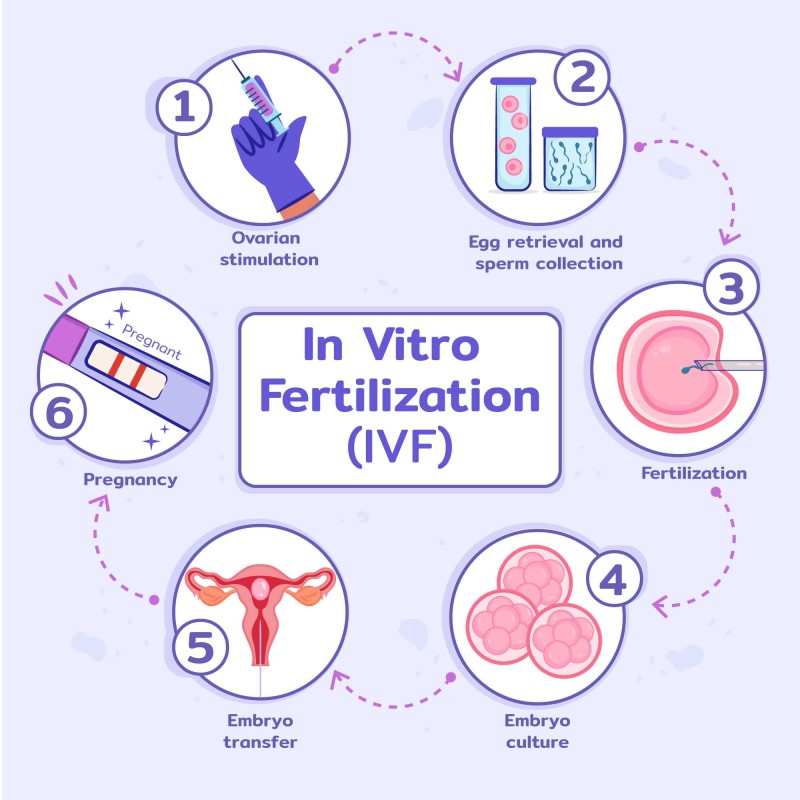
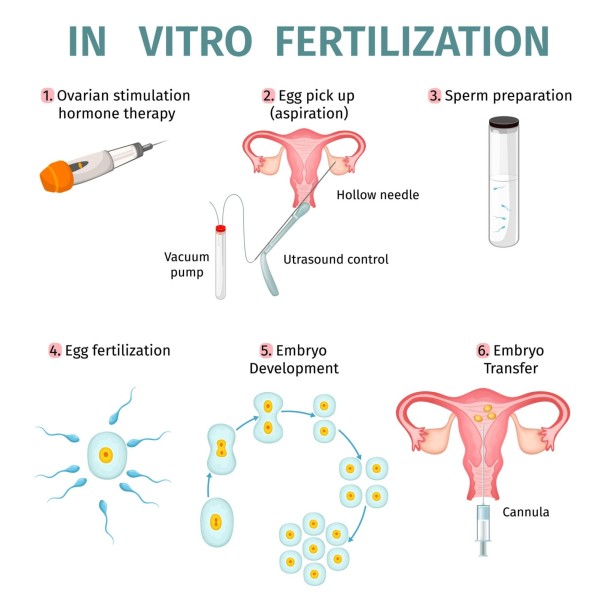
IVF is not a single procedure — it's a series of carefully timed steps spread over several weeks. Here's what a typical IVF cycle looks like:
Step 1: Initial Consultation & Fertility Testing
Before beginning IVF, both partners undergo a comprehensive evaluation. This includes blood tests to check hormone levels (FSH, LH, AMH, estradiol), an ultrasound to assess ovarian reserve, a semen analysis for the male partner, and a review of medical history. This stage helps your fertility specialist customize the treatment protocol specifically for you.
Step 2: Ovarian Stimulation
In a natural cycle, only one egg matures per month. With IVF, hormonal injections (gonadotropins) are administered daily for 8–14 days to stimulate the ovaries to produce multiple eggs. Regular monitoring through blood tests and ultrasounds ensures the follicles are growing at the right pace. This phase can feel physically demanding — bloating, mood swings, and discomfort are common.
Step 3: Egg Retrieval
Once follicles are mature, a trigger injection (HCG) is given to prepare the eggs for retrieval. About 36 hours later, eggs are collected under mild sedation using a thin needle guided by ultrasound. The procedure takes about 20–30 minutes. Most women recover within a day, though mild cramping and spotting are normal.
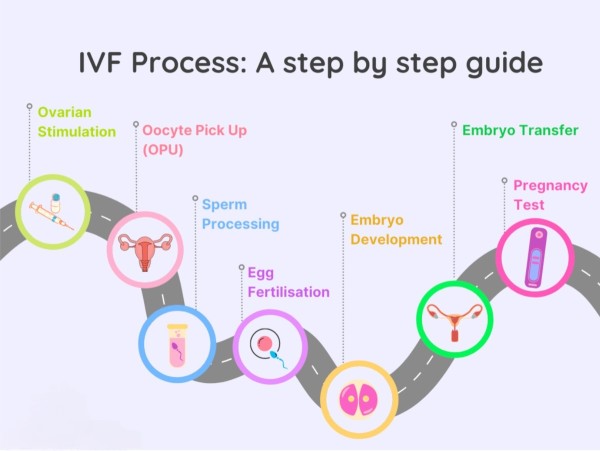
Step 4: Fertilization & Embryo Development
The retrieved eggs are fertilized with sperm in the lab either through conventional IVF (mixing egg and sperm) or ICSI (Intracytoplasmic Sperm Injection — injecting a single sperm directly into an egg). Fertilized eggs are monitored over 3–5 days as they develop into embryos. The best quality embryos are selected for transfer.
Step 5: Embryo Transfer
This is the moment of hope. One or two embryos are placed into the uterus using a thin catheter — a simple, usually painless procedure that doesn't require sedation. Many describe this as an emotional milestone in their journey. After the transfer, rest and progesterone support medications are prescribed to help the embryo implant.
Step 6: The Two-Week Wait & Pregnancy Test
The 10–14 days after the embryo transfer — known as the 'two-week wait' — are often the most emotionally challenging. You'll be advised to avoid strenuous activity, alcohol, and stress. A blood test (beta-HCG) confirms whether implantation was successful. The emotional rollercoaster during this period is entirely normal and valid.
IVF Success Rates: What the Numbers Mean
IVF success rates vary depending on age, diagnosis, and clinic. Here's a general overview:
|
Age Group |
Approx. Success Rate |
Notes |
|
Under 35 |
40–50% |
Best chances with own eggs |
|
35–37 |
30–40% |
Still good response to stimulation |
|
38–40 |
20–30% |
May need more cycles |
|
Over 40 |
10–20% |
Donor eggs may improve odds |
Note: These are approximate figures. Your specialist will give a personalized prognosis based on your specific case.
The Emotional Side of IVF Nobody Talks About
IVF is as much an emotional journey as it is a medical one. It's completely normal to experience:
- Anxiety and fear about the outcome
- Grief if a cycle is unsuccessful
- Relationship strain from stress and hormonal changes
- Financial pressure, as multiple cycles can be expensive
- Feeling isolated — especially if you're not sharing the journey with others
Seeking support from a counselor, joining a fertility support group, or simply being open with your partner can make a significant difference. You are not alone in this.
Tips to Improve Your IVF Success
- Maintain a healthy body weight — both underweight and overweight can affect outcomes
- Quit smoking and alcohol at least 3 months before beginning IVF
- Eat a fertility-friendly diet rich in antioxidants, leafy greens, lean protein, and healthy fats
- Manage stress through yoga, meditation, or gentle walks
- Take prenatal vitamins (especially folic acid) as recommended by your doctor
- Follow your medication schedule precisely — timing matters enormously in IVF
- Get adequate sleep — your body heals and balances hormones during rest
Final Thoughts: Hope Is Not a Strategy — But It Helps
IVF is one of modern medicine's most remarkable achievements, offering a path to parenthood for millions of families worldwide. It is not easy, and it is not always successful on the first try. But with the right medical support, emotional resilience, and honest expectations, many couples find their way to a positive outcome.
If you are considering IVF, take it one step at a time. Ask your doctor every question you have. Lean on your support system. And remember — your journey is yours alone, and it deserves to be honored.
Search Content
Top Ten Posts
Categories
Advertisement