The Way Cloud Computing Is Transforming The Healthcare Industry
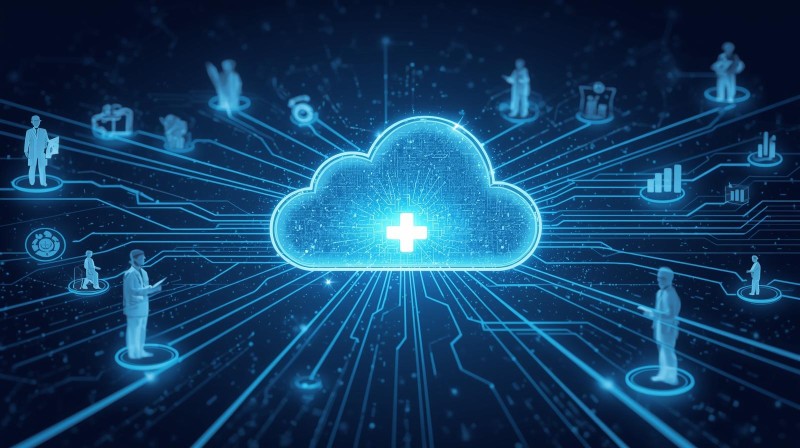
The healthcare sector is experiencing an enormous technological change in the digital age of the modern world. Integration of cloud computing is one of the most influential developments. Cloud computing in the healthcare sphere is redefining the way medical data are stored, accessed, and used by making them more secure, scalable, and cost-effective.
Improved Data Interviews and Cooperation.
There is usually a problem of information silos in healthcare. Cloud computing is a centralized solution that enables physicians, specialists, and hospitals to receive and share patient data in real time in an easy manner. This will imply enhanced coordination, faster diagnosis and patient outcome.
The best example of this is Electronic Health Records (EHRs) that are kept in the cloud. Such records may be updated real time and be accessed securely by authorized personnel in any of the various facilities thus reducing redundancy and minimizing errors.
Better Data Protection and Compliance.
The issue of security is pertinent in healthcare. Medical information is confidential and their violation may result in legal, ethical, and monetary repercussions. Cloud providers spend a lot of money on effective security measures such as end to end encryption, multi factor authentication, and the aspect of frequent security audits. A lot of platforms are also in accordance with regulations such as HIPAA in the industry thus securing the protection and privacy of the data.
Scalability and Cost Effectiveness.
Healthcare institutions, particularly small to middle sized clinics, tend to have small IT budgets. Necessary physical infrastructure is done away with by cloud computing. Pay-as-you-go means that facilities can expand their storage and computing capacity in line with real utilization and is therefore an economical solution to growing demands.
Making Telemedicine and Remote Monitoring possible.
The use of telemedicine has been growing exponentially, particularly after the COVID-19 pandemic. Remote consultations, AI-based diagnostics, and wearable health technology can be facilitated using cloud computing to make sure that data exchange occurs in real-time between devices, doctors, and patients.
Cloud infrastructure is very dependent on remote patient monitoring, which includes tracking blood pressure, glucose level or heart rates. This allows the healthcare providers to provide interventions at the right time without necessarily having to visit them physically.
Creating AI and Big Data-driven Innovation.
The cloud serves as a platform to integrate new and more sophisticated technologies such as artificial intelligence (AI) and big data analytics. Patterns in patient records, disease epidemiology predictions, and individual treatment plans can be recommended with help of these tools. Hospitals are able to make better decisions and enhance operation efficiency and treatment of patients.
Conclusion
Overall, the use of clouds in healthcare is more than a trend, it is a need of the contemporary healthcare system. It guarantees enhanced care provision, efficient operations and enhanced protection of data. The future of the healthcare sector will also see the contribution of the cloud, as more healthcare providers will be digitalizing their operations.
We would like to have you on board in case you are obsessed with technology, innovation and writing. Write for Us Technical and express your knowledge before an expanding community of experts and fans.
Ready to contribute?
Become a part of our group of intellectual individuals. Share your expertise, become an expert in your profession, and reach more people. Publish your guest post now and become a part of the future of tech.
Search Content
Top Ten Posts
Categories
Advertisement